As an Amazon Associate I earn from qualifying purchases.
Last updated: November 3, 2026
A lost or broken charger can park your ebike faster than a flat tire. The good news is that finding the right replacement isn’t guesswork once you know what to look for. Every ebike battery charger has to match two things on your battery: the voltage and the plug. Get both right and charging is simple. Get either one wrong and you risk a dead battery, or worse, a fire. This guide shows you how to read your battery’s label and charging port, then walks through four 48V chargers sorted by plug type, plus two small items that make charging at home safer.
Quick answer: The right ebike battery charger is the one your bike's maker supplies or recommends. If you need a replacement, match the charger's output to your battery (54.6V for a 48V pack), then match the plug: round barrel, three-pin XLR, RCA or screw-on GX16 aviation. Avoid multi-plug universal chargers.
| Need | Pick |
|---|---|
| Round barrel port | DC barrel charger 54.6V UL Certified Charger With DC Barrel Plug |
| Three-pin XLR port | XLR charger TANGSPOWER 54.6V XLR 3-Pin Charger |
| RCA port | RCA charger 54.6V 1.5A RCA 10mm Plug Charger |
| Screw-on aviation port | GX16 charger 54.6V 2A GX16-3 Charger |
Why the Plug and Voltage Both Matter
- Voltage first: a 48V lithium battery needs a charger that outputs 54.6V. Your battery label or manual lists the voltage, often next to the cell count (13S for 48V).
- A round port like a phone charger: that's a DC barrel plug, so you need a barrel charger with the matching tip size.
- Three pins in a triangle inside a round housing: that's XLR, so look for a 3-pin XLR charger.
- A small round socket with a center pin: that's an RCA port, usually listed as a 10mm RCA plug.
- A metal port with a screw-on collar: that's a GX16 aviation connector, so pick a GX16-3 charger.
- Charging indoors at night or in a garage: a fire-resistant charging bag and a working smoke alarm add a layer of protection.
Matching matters more than most riders think. In a 2024 statement, the U.S. Consumer Product Safety Commission warned that even good batteries can cause fires when used with incompatible chargers. It reported 156 fire and thermal incidents involving “universal” micromobility chargers in the first four and a half months of 2024, and its advice is to charge with the supplied charger or get a replacement from the original manufacturer.
So start with your bike’s maker. Many brands sell replacement chargers directly, and that’s always the safest route. If your brand is gone or the part is discontinued, a matched aftermarket charger is the fallback. Our guide to the universal ebike charger myth covers every common voltage, from 24V to 72V.
How We Picked
We picked chargers for the most common battery voltage, 48V, and sorted them by plug type so you can match your port in seconds. Each one is a single-plug charger with a 54.6V output, chosen from items available on Amazon based on the connector, output and protections in its listing. We skipped multi-plug universal chargers. Check the listing against your battery label, and read recent reviews before you buy.
1. DC Barrel Plug Charger
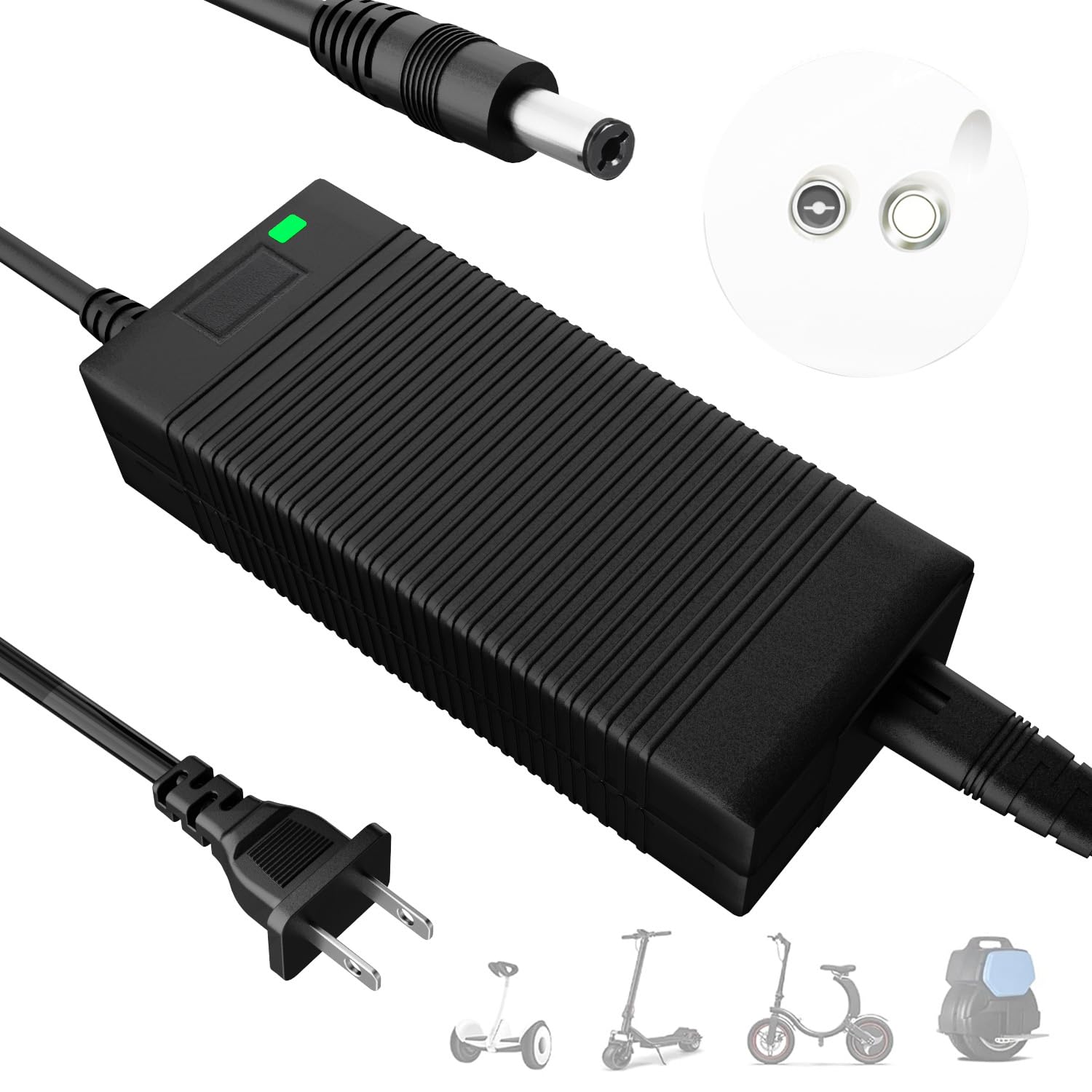
54.6V UL Certified Charger With DC Barrel Plug
Best for: 48V batteries with a round barrel port
Barrel ports are common on budget ebikes and scooters, and this charger covers both popular tip sizes. The listing says it's UL certified, with over-voltage, over-current and short-circuit protection and an automatic shut-off at full charge. A red light means it's charging and green means it's done, which takes the guessing out of when to unplug.
- 54.6V output for 48V lithium batteries, UL certified
- DC 5.5 x 2.5mm and 5.5 x 2.1mm connectors
- Red and green LED, auto shut-off when full
Good to know: The two barrel sizes look almost the same, so measure your port or check your manual before ordering.
How to use: Plug the charger into the wall first, then into the battery, and unplug it once the light turns green instead of leaving it connected.
2. XLR 3-Pin Charger

TANGSPOWER 54.6V XLR 3-Pin Charger
Best for: 48V batteries with a three-pin XLR port
XLR plugs lock in firmly, which is why many larger ebikes use them. This replacement outputs 54.6V at 1.5A, and the listing says it works with the Rad Runner and Aventon Level and suits 12Ah to 15Ah packs. A built-in fan and heat-sink fins move warmth away from the board, backed by thermal and overload protection.
- 54.6V output, 1.5A, gold XLR 3-pin plug
- Built-in fan with heat-dissipating fins
- Thermal and overload protection
Good to know: The listing says the case gets warm while charging, so give it open air rather than tucking it under a cushion.
How to use: Line up the XLR pins, push until the plug seats fully, and set the charger on a hard, flat surface while it works.
3. RCA 10mm Plug Charger

54.6V 1.5A RCA 10mm Plug Charger
Best for: 48V batteries with an RCA charging port
RCA ports show up on many rear-rack and frame batteries, and finding a matching charger can be the hardest part. This one has the 10mm RCA plug, a 54.6V output at 1.5A and thermal and overload protection. The listing also suggests not running the battery below 35% or charging past 85-90% to help it last longer.
- 54.6V output, 1.5A, RCA 10mm plug
- Thermal and overload protection
- Red light while charging, green when full
Good to know: It has fewer reviews than the other picks, so read recent ones and confirm the plug size first.
How to use: For daily rides, try unplugging a little before full, as the listing suggests, then do a full charge before a long trip.
4. GX16 Aviation Plug Charger
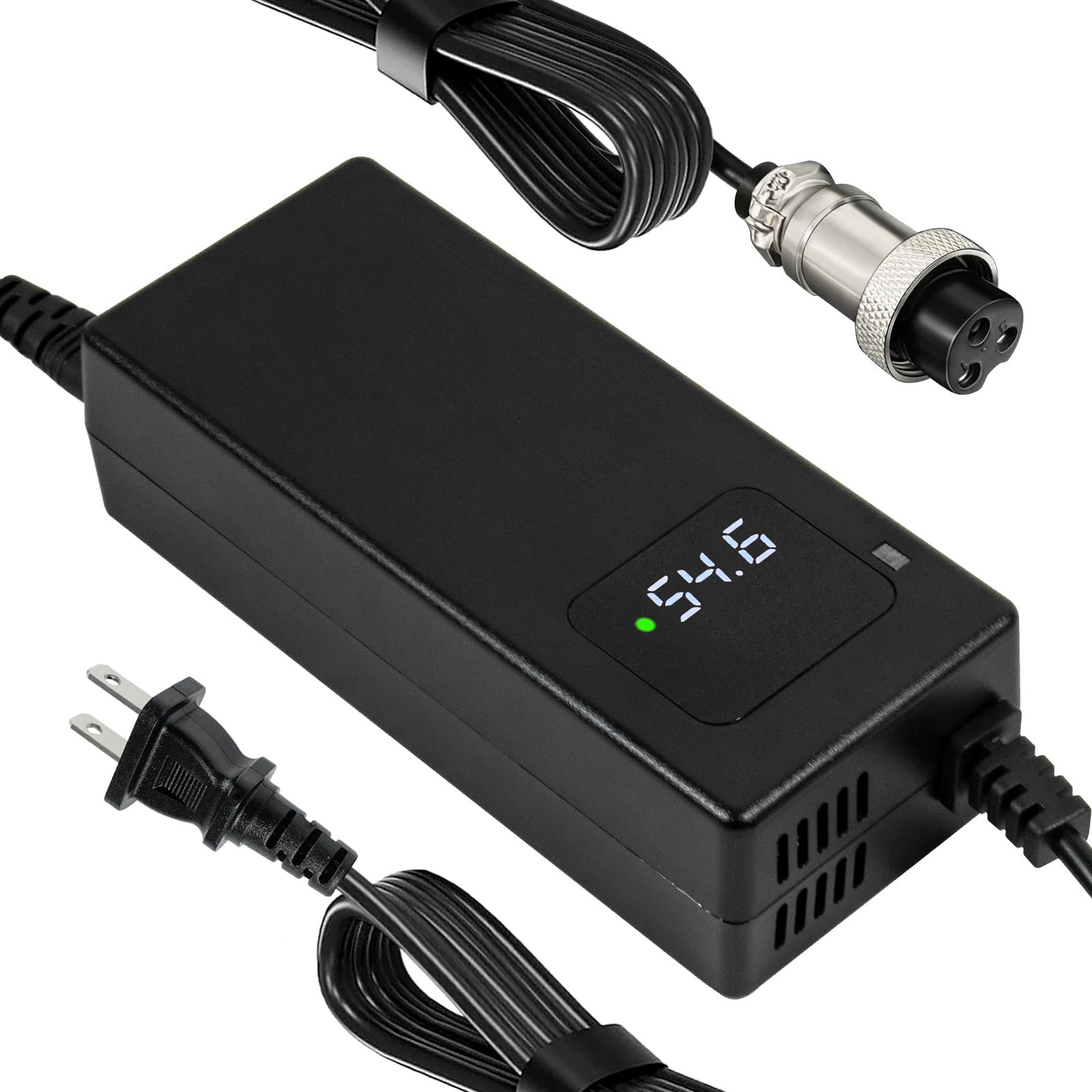
Best for: 48V batteries with a screw-on aviation port
GX16 connectors have a threaded collar that screws on, so the plug won't wiggle loose mid-charge. This charger pairs the GX16-3 three-prong plug with a 54.6V, 2A output for 48V 13S lithium packs. Its display shows the charging voltage, which reads 54.6V at full, and an internal fan helps it stay cool.
- 54.6V 2A output, GX16-3 three-prong connector
- Display shows battery charging voltage
- Built-in fan, auto shut-off when full
Good to know: The listing gives a 100-120V AC input, so it suits U.S. outlets but not overseas travel.
How to use: Screw the collar on finger-tight; there's no need for tools, and overtightening can strain the pins over time.
Compare All Picks at a Glance
| Pick | Best for | What’s in it |
|---|---|---|
| 54.6V UL Certified Charger With DC Barrel Plug | Round barrel ports | 54.6V, 5.5mm DC barrel tips, UL certified |
| TANGSPOWER 54.6V XLR 3-Pin Charger | Three-pin XLR ports | 54.6V 1.5A, XLR 3-pin, built-in fan |
| 54.6V 1.5A RCA 10mm Plug Charger | RCA ports | 54.6V 1.5A, RCA 10mm plug, thermal protection |
| 54.6V 2A GX16-3 Charger | Screw-on aviation ports | 54.6V 2A, GX16-3 plug, voltage display, fan |
How to Charge an Ebike Battery Safely at Home
The right charger is step one. Where and how you charge matters just as much, and two simple items help.
- Set the battery inside a Large Fireproof Ebike Battery Charging Bag while it charges; it's made of fire-resistant glass fiber and has a hidden hole for the charging cable.
- Mount a X-Sense 10-Year Smoke Alarm in the room where you charge; it runs on a sealed 10-year battery and uses photoelectric sensing.
Then build a few habits. The U.S. Fire Administration advises using only original or certified replacement chargers, charging on solid, flat surfaces and not blocking ventilation. It also says to stop using a battery right away if it’s smoking, hissing, punctured or swollen. The CPSC adds that you should stay nearby while charging and never charge while you sleep or are away from home.
Between rides, a sturdy case keeps the pack protected from knocks and weather. Our ebike battery box guide compares bags, cases and fire-resistant storage options.
Mistakes to Avoid With an Ebike Battery Charger
- Buying a multi-plug universal charger because it seems to fit everything.
- Matching the plug but not the voltage; a 36V battery needs a 42V charger, not a 54.6V one.
- Using a lithium charger on a lead-acid battery, or the other way around.
- Charging overnight or while you're out of the house.
- Charging on a bed, couch or carpet where heat can build up.
- Keeping a battery in service after it swells, leaks or smells odd.
- Leaving the charger plugged in for days after the battery is full.
If your battery itself is worn out, a new charger won’t bring it back. Our detachable ebike battery guide sorts replacement packs by mount and connector.
Ebike Battery Charger FAQ
Can I use any charger for my ebike battery?
No. The charger must match your battery’s voltage and plug, and the CPSC recommends using the supplied charger or a replacement from the original manufacturer. A mismatched charger can overcharge the battery and create a fire risk, even with a good battery.
What charger do I need for a 48V ebike battery?
A 48V lithium battery needs a charger with a 54.6V output. Then match the plug on your battery, such as a DC barrel, XLR, RCA or GX16 connector. Check your battery label or manual to confirm both before buying.
How long does it take to charge an ebike battery?
It depends on the battery size and the charger’s amps. As one example, the barrel charger here lists about 4-6 hours from empty to full for most 48V packs. A higher-amp charger fills the same battery faster than a lower-amp one.
Should I charge my ebike battery overnight?
No. The CPSC says to stay present while charging micromobility devices and never charge them while you sleep or are away from home. Charge during the day, on a hard surface, and unplug once the charger shows the battery is full.
Your Shopping Checklist
- DC Barrel Plug Charger: 54.6V UL Certified Charger With DC Barrel Plug
- XLR 3-Pin Charger: TANGSPOWER 54.6V XLR 3-Pin Charger
- RCA Plug Charger: 54.6V 1.5A RCA 10mm Plug Charger
- GX16 Aviation Plug Charger: 54.6V 2A GX16-3 Charger
Before you order anything, flip your battery over and read the label, then take a close look at the charging port. With the voltage and plug type in hand, you can pick a charger in a minute. Go back to your bike’s maker first, use a matched single-plug charger if you can’t, and charge where you can keep an eye on it. That’s all it takes to keep riding without worry.
Sources
- Commissioner Trumka Urges Consumers Not to Use "Universal" Chargers for E-bikes Because of Fire Hazard, U.S. Consumer Product Safety Commission
- Micromobility Information Center, U.S. Consumer Product Safety Commission
- Lithium-Ion Batteries: Everyday Convenience, Hidden Fire Risks, U.S. Fire Administration