As an Amazon Associate I earn from qualifying purchases.
Last updated: October 24, 2026
Lost your e-bike charger, or watched it die the week before a big ride? It’s tempting to search for one charger that works with everything. The honest truth is that a universal ebike charger doesn’t really exist. Every lithium battery needs a charger with the right output voltage, a plug that fits its port the right way round, and a current it can safely accept. Safety agencies go further and say to use the charger made for your bike. This guide explains what to check, when a replacement makes sense, and seven voltage-matched chargers for when the original isn’t available.
Quick answer: A universal ebike charger isn't safe to assume. Use the charger that came with your bike or one its maker recommends. For a replacement, match the output voltage to your battery: 42V for 36V, 54.6V for 48V, 58.8V for 52V, 29.4V for 24V and 84V for 72V. Then match the plug, and choose a certified charger.
| Need | Pick |
|---|---|
| 36V battery | 42V output charger Jucuwe 42V 2A Charger for 36V Batteries |
| 48V battery | 54.6V UL certified charger 54.6V UL Certified Charger for 48V 13S Batteries |
| 52V battery | 58.8V fast charger 58.8V 3A/5A Charger for 52V Batteries |
| 48V battery with XLR port | 54.6V XLR charger YZPOWER 48V Ebike Charger with XLR Plug |
Why a Universal Ebike Charger Isn't Truly Universal
- Voltage must match exactly: a 36V battery needs a 42V output, a 48V battery needs 54.6V, and so on. The wrong one can overcharge or never fully charge the pack.
- Plugs differ: barrel DC plugs, XLR, RCA and 3-prong sockets all exist, and polarity must be correct.
- Current matters: a 5A fast charger only helps if your battery is rated to accept that much.
- Chemistry matters: lithium chargers are not for lead-acid batteries, and the reverse is true too.
- Certification counts: look for a recognized safety listing, such as UL, on the charger itself.
This isn’t just fussiness. In a 2024 statement, CPSC Commissioner Richard Trumka urged consumers not to use “universal” chargers for e-bikes, warning that even good batteries can cause fires when used with incompatible chargers. The CPSC’s micromobility guidance says to only use the charger provided with or recommended by the manufacturer of your device.
So start with your bike’s maker: many sell replacement chargers directly. If that isn’t possible, the U.S. Fire Administration advises using only original or certified replacement chargers and avoiding low-cost knockoffs that lack important safety features. Read the label on your battery or old charger, then match every number.
How We Picked
We chose seven replacement chargers, each matched to a single battery voltage or plug type, based on the output voltage, current, plug options and protections described in each Amazon listing. Where a listing states UL certification, we say so. Every pick is available on Amazon. Compare the specs with your battery's label, check the current listing and read recent reviews before you buy.
1. 42V Charger for 36V Batteries
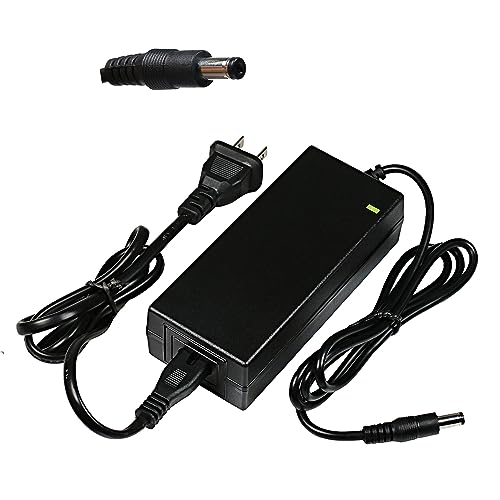
Jucuwe 42V 2A Charger for 36V Batteries
Best for: 36V lithium e-bike batteries with a barrel plug
Most commuter e-bikes and small conversion kits run on 36V packs, which charge to 42 volts. This Jucuwe charger gives 42V at 2A through a 5.5mm barrel plug, and its LED turns from red to green when the charge is done. Short circuit, overvoltage and overcurrent protection are built in.
- 42V 2A output for 36V lithium packs
- 5.5 x 2.1/2.5mm DC barrel plug
- Red/green charge indicator
Good to know: The maker says not to use it with plug adapters, so it only suits batteries with this barrel socket.
How to use: Connect the charger to the battery first, then plug it into the wall, and unplug both once the light turns green.
2. 54.6V Charger for 48V Batteries
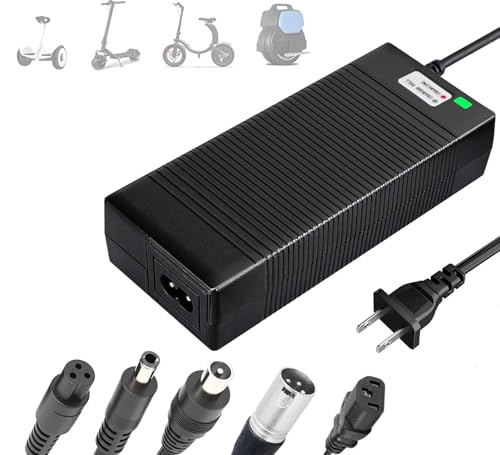
54.6V UL Certified Charger for 48V 13S Batteries
Best for: 48V (13S) lithium e-bike batteries
A 48V lithium pack charges to 54.6 volts, and this charger is made only for 48V 13S packs. It's one of the few in this list that the listing says is UL certified, with overvoltage, overcurrent, short circuit and temperature protection. It outputs 1.5A and comes with several plug options.
- 54.6V 1.5A output, 48V 13S lithium only
- Listed as UL certified
- Barrel plug plus 4 converters, including XLR
Good to know: At 1.5A it charges more slowly than a fast charger, which many batteries handle well.
How to use: Pick the plug that matches your battery's socket exactly, check its polarity against your old charger's label, then charge while you're home and awake.
3. 58.8V Fast Charger for 52V Batteries

58.8V 3A/5A Charger for 52V Batteries
Best for: 52V lithium packs on higher-power builds
52V packs are popular on powerful conversions, and they need a 58.8-volt charger that a 48V model can't provide. This one is sold with the plug fitted directly, so no adapter is needed, and comes in 3A or 5A versions. A cooling fan and protection chip guard against overvoltage, overcurrent, short circuit and heat.
- 58.8V output, 3A or 5A versions
- Plug fitted directly, no adapter needed
- Built-in cooling fan
Good to know: The battery's own limit sets the charge rate, so a 5A charger only helps if your pack accepts 5A.
How to use: Choose the plug option that matches your battery when ordering, check the battery's maximum charge current, and charge on a hard, clear surface.
4. 29.4V Charger for 24V Batteries

UL Certified 29.4V 2A Charger for 24V Batteries
Best for: 24V lithium e-bikes and light conversions
Older and lighter e-bikes often use 24V packs that charge to 29.4 volts. This charger is only for 24V 7S lithium batteries, and its listing says it is UL certified with protection against overvoltage, overcurrent, short circuit and overheating. It outputs 2A and shows red while charging, green when full.
- 29.4V 2A output, 24V 7S lithium only
- Listed as UL certified
- 5.5 x 2.1mm DC plug plus 6 adapters
Good to know: It's also sold for scooters and hoverboards, so double-check your bike's battery is a 24V lithium pack.
How to use: Read your battery label for 24V or 25.2V lithium, fit the matching plug, and stay nearby until the light turns green.
5. 54.6V Fast Charger for Large 48V Batteries

54.6V 3A/5A Fast Charger for 48V Batteries
Best for: Big 48V packs that take hours on a 2A charger
A large 48V pack can take most of a day on a slow charger. This 54.6V model comes in 3A or 5A versions with seven plug choices fitted directly, so there's no loose adapter in the circuit. A cooling fan and a protection chip guard against overvoltage, overcurrent, short circuit and overheating.
- 54.6V output, 3A or 5A versions
- 7 plug types to choose from, no adapter
- Built-in cooling fan
Good to know: Faster charging creates more heat, so only use it if your battery's specs allow that current.
How to use: Order the plug that matches your port, confirm the battery's charge current, and keep the fan vents clear while it runs.
6. 84V Charger for 72V Batteries

84V 3A Charger for 72V Batteries
Best for: 72V (20S) lithium high-power builds
High-power 72V builds need an 84-volt charger, and few general chargers go that high. This one outputs up to 3A and comes with three connection options: a built-in barrel plug, an XLR plug and an IEC plug. It has overvoltage, overcurrent, overload and short-circuit protection, with a light that turns green when charged.
- 84V 3A max output for 72V 20S lithium
- Barrel, XLR or IEC plug options
- Overvoltage, overcurrent and short-circuit protection
Good to know: The listing doesn't name a specific safety certification, so ask the seller before buying.
How to use: Confirm your pack is 72V 20S lithium, choose the plug that fits, and never leave a pack this size charging unattended.
7. 54.6V XLR Charger for 48V Batteries

YZPOWER 48V Ebike Charger with XLR Plug
Best for: 48V batteries with a 3-pin XLR charging port
Many downtube and rear rack batteries use a 3-pin XLR socket, and this charger has that plug built in. YZPOWER's charger gives 54.6V at 2A for 48V lithium packs, has a cooling fan and red-to-green indicator, and protects against overvoltage, overcurrent, short circuit and overheating.
- 54.6V 2A output for 48V lithium
- Built-in 3-pin XLR plug
- Fan cooled with red/green indicator
Good to know: XLR pin layouts can differ, so compare your old charger's label and plug before ordering.
How to use: Line up the XLR pins with the battery socket, push until it clicks, and remove it once the light shows green.
Compare All Picks at a Glance
| Pick | Best for | What’s in it |
|---|---|---|
| Jucuwe 42V 2A Charger for 36V Batteries | 36V batteries | 42V 2A, 5.5mm barrel plug |
| 54.6V UL Certified Charger for 48V 13S Batteries | 48V batteries, UL listed | 54.6V 1.5A, barrel plus 4 converters |
| 58.8V 3A/5A Charger for 52V Batteries | 52V batteries | 58.8V 3A or 5A, fan cooled |
| UL Certified 29.4V 2A Charger for 24V Batteries | 24V batteries, UL listed | 29.4V 2A, barrel plus 6 adapters |
| 54.6V 3A/5A Fast Charger for 48V Batteries | Large 48V batteries | 54.6V 3A or 5A, 7 plug options |
| 84V 3A Charger for 72V Batteries | 72V batteries | 84V 3A, barrel, XLR or IEC |
| YZPOWER 48V Ebike Charger with XLR Plug | 48V batteries with XLR port | 54.6V 2A, 3-pin XLR, fan cooled |
How to Charge Safely With a Replacement Charger
- Before the first charge, check your battery's resting voltage with a Klein Tools MM420 multimeter and make sure it sits within the normal range for its rated voltage.
- Plug the charger straight into a wall outlet, not an extension cord or power strip, and charge on a hard surface away from exits and bedding. For extra peace of mind, charge removable packs inside a FLASLD fireproof e-bike battery bag.
Mistakes to Avoid With E-Bike Chargers
- Buying by plug shape alone. A charger that fits can still have the wrong voltage or polarity.
- Charging overnight or while you're out. Stay home and awake, and unplug when it's done.
- Using a 5A charger on a battery rated for less. Check the pack's maximum charge current.
- Mixing lithium and lead-acid chargers. They charge differently and aren't interchangeable.
- Ignoring warning signs. If the battery or charger gets very hot, smells, swells or hisses, stop and unplug.
Universal Ebike Charger FAQ
Is there a universal ebike charger that fits all bikes?
No. Chargers must match the battery’s voltage, plug, polarity and charge current, and safety agencies advise using the original or a manufacturer-recommended charger. Multi-plug chargers still only work with one battery voltage.
What charger do I need for a 48V e-bike battery?
A 48V lithium battery (13S) needs a charger with a 54.6V output. Check the plug type and polarity on your battery’s charging port, and make sure the charging current doesn’t exceed what the battery is rated to accept.
Can I use a higher amp charger on my e-bike?
Only if your battery is rated for that charging current. A higher-amp charger may charge faster, but if the battery’s maximum charge current is lower, it can add heat and stress. Check the battery’s specs or ask its maker.
How do I find my e-bike battery’s voltage?
Look for a label on the battery or the original charger. The battery shows its nominal voltage, such as 36V or 48V, and the charger shows its output, such as 42V or 54.6V. A multimeter can confirm the battery’s current voltage.
Your Shopping Checklist
- 36V Charger (42V Output): Jucuwe 42V 2A Charger for 36V Batteries
- 48V Charger (54.6V Output): 54.6V UL Certified Charger for 48V 13S Batteries
- 52V Charger (58.8V Output): 58.8V 3A/5A Charger for 52V Batteries
- 24V Charger (29.4V Output): UL Certified 29.4V 2A Charger for 24V Batteries
- 48V Fast Charger: 54.6V 3A/5A Fast Charger for 48V Batteries
- 72V Charger (84V Output): 84V 3A Charger for 72V Batteries
- XLR Plug Charger: YZPOWER 48V Ebike Charger with XLR Plug
There’s no shortcut with e-bike chargers. The original charger, or one the manufacturer recommends, is always the safest choice. If you do need a replacement, read your battery’s label, match the voltage, plug and current exactly, choose a certified model where you can, and stay close while it charges.
Sources
- Commissioner Trumka Urges Consumers Not to Use "Universal" Chargers for E-bikes Because of Fire Hazard, U.S. Consumer Product Safety Commission
- Micromobility: E-Bikes, E-Scooters and Hoverboards, U.S. Consumer Product Safety Commission
- Lithium-Ion Batteries: Everyday Convenience, Hidden Fire Risks, U.S. Fire Administration
1 thought on “Universal Ebike Charger: How to Pick a Safe Replacement”